
Escrow Fees

Understanding Escrow Fees Associated with Million-Pounds / Dollar Accounts
High-value transactions in United Kingdom carry substantial escrow costs that can surprise unprepared buyers and sellers. When you are dealing with million-pounds real estate purchases, business acquisitions, or luxury property transfers, escrow fees alone can range from £2,000 to £25,000 or more depending on transaction complexity and value. Understanding how these fees are calculated, what services they cover, and how to budget for them ensures your transaction proceeds without financial surprises or delays.
Escrow fees in United Kingdom are not regulated by the state government in terms of amount, but providers must maintain transparency and provide written fee agreements. For million-pounds transactions, these costs scale with value but not always proportionally. A £10 million transaction does not necessarily cost ten times more to escrow than a £1 million deal. Volume discounts, commercial transaction minimums, and specialized service tiers all affect final pricing. For comprehensive business escrow services handling high-value transactions, working with experienced providers ensures transparent pricing and professional service commensurate with your investment size.
How Escrow Fees Are Calculated for High-Value Transactions
UK escrow companies typically use tiered pricing models that combine base fees with variable rates based on transaction value. Understanding this calculation method helps you anticipate costs and compare quotes effectively.
The Base Fee Structure
Most UK escrow companies calculate fees using a base amount plus a per-thousand charge on the transaction value. Base fees typically range from £1,000 to £2,000 for commercial or high-value transactions. The variable component usually runs £2 to £4 per £1,000 of value, though this rate often decreases as transaction size increases due to volume discounts. For example, a £2 million transaction might incur a base fee of £1,500 plus £2.50 per £1,000 (£5,000), totaling £6,500. However, a £5 million transaction might receive a reduced rate of £2 per £1,000 (£10,000) plus the same base, totaling £11,500 rather than the proportional £16,250.
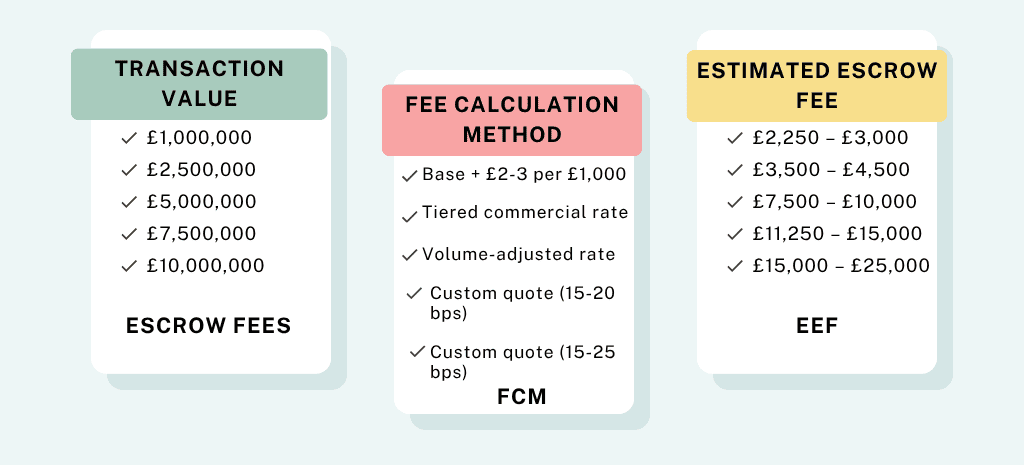
Components of Million-Dollar Escrow Fees
Escrow fees for high-value transactions encompass multiple service components beyond simple fund holding. Understanding these components helps you evaluate whether quoted fees represent fair value for services rendered.
Base Escrow Service Fee
The core escrow service fee covers neutral third-party oversight, fund management in segregated trust accounts, and coordination between all transaction parties. For million-pounds transactions, this fee typically represents 0.20% to 0.50% of transaction value, though complex commercial deals may fall outside this range. The fee scales with transaction complexity as much as value; a simple £5 million cash purchase may cost less than a £2 million transaction involving multiple lenders, foreign investors, and complex entity structures.
Document Preparation and Review
High-value transactions require extensive documentation preparation and review. Escrow officers prepare detailed escrow instructions tailored to complex transactions, coordinate multiple amendments and addenda, generate settlement statements accounting for all funds, and ensure compliance with the UK recording and transfer requirements. For business sales, this includes coordination of asset allocation schedules, bulk sales notices, and regulatory compliance documentation.
Wire Transfer and Banking Fees
Million-dollar transactions involve multiple secure wire transfers between financial institutions. Each outgoing wire incurs banking fees typically ranging from £25 to £75 per transfer, which are passed through to clients. High-value transactions may require separate wires for earnest money deposit, buyer funds, lender disbursement, seller proceeds, payoff of existing liens, and distribution to various third parties. International transactions involving foreign investors incur additional currency conversion fees and international wire charges.
Title Insurance Coordination
While title insurance premiums are paid directly to title companies, escrow officers coordinate these services as part of the closing process. For million-pounds properties, ensuring clear title requires extensive research and coordination. Escrow fees include management of title clearance issues, coordination with title officers for policy issuance, and handling of title-related disbursement holds until clearance is confirmed.
For transactions requiring extended holding periods or specialized fund management, holding escrow services provide customized solutions with fee structures adjusted for duration and complexity.
Commercial vs. Residential Escrow Fee Structures
Transaction type significantly affects escrow fee calculation. Commercial transactions, business sales, and specialized transfers command higher fees than standard residential sales due to increased complexity and risk.
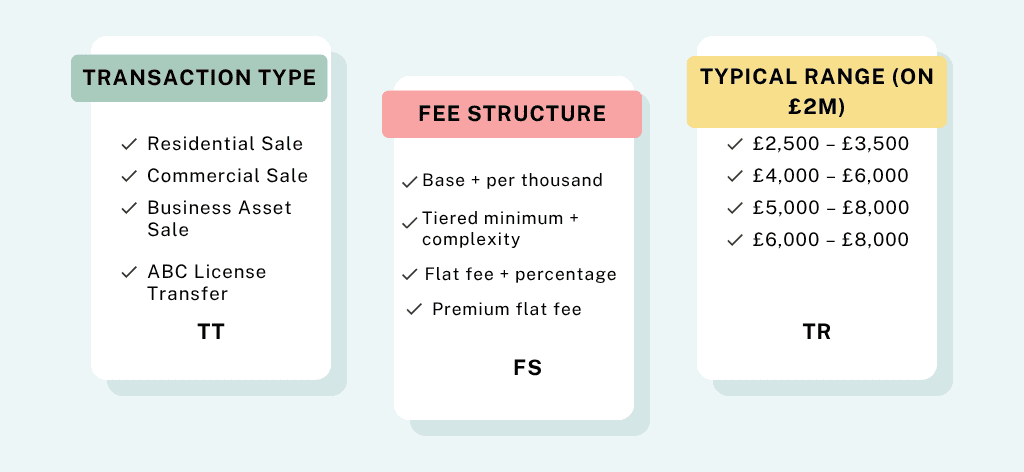
Why Commercial Transactions Cost More
Commercial and business transactions involve increased complexity requiring additional escrow officer time and expertise. Multiple lender coordination becomes necessary when buyers use complex financing structures or when sellers have multiple existing loans requiring payoff. Bulk sales compliance requirements under UK Commercial law mandate specific notice procedures that extend escrow timelines and increase administrative burden. Extended holding periods for staged disbursements or regulatory approval contingencies require escrow companies to maintain funds for longer durations. Environmental assessments, zoning compliance verification, and tenant estoppel coordination add layers of complexity absent in residential transactions.
Factors That Influence Million-Pounds Escrow Costs
Beyond base transaction value, several variables affect final escrow pricing. Understanding these factors helps you anticipate costs and potentially negotiate favorable terms.
Transaction Complexity
Complexity significantly impacts escrow fees. Simple cash purchases with no contingencies require minimal escrow officer time. Multi-party deals involving numerous investors, complicated entity structures such as LLCs with multiple members, or international buyers requiring currency conversion and additional compliance verification all increase costs. Transactions involving multiple property transfers as part of a single deal, 1031 exchanges requiring coordination with qualified intermediaries, or properties with complex title histories requiring extensive clearance work command premium pricing.
Geographic Location
Escrow fees vary by UK region due to market competition, local transfer taxes, and regional customs. London maintain competitive escrow markets with relatively standardized pricing due to elevated real estate values and complex regulatory environments.
Timeframe and Urgency
Standard escrow processing typically spans 30 to 45 days for residential transactions and 60 to 90 days for commercial deals. Expedited closings requiring completion within 7 to 10 days often incur rush fees ranging from 25% to 50% above standard rates. Extended holding periods necessary for regulatory approvals, such as ABC license transfers or cannabis business transitions, may incur monthly holding fees. After-hours or weekend closing appointments for time-sensitive transactions typically carry premium surcharges.
Number of Principals Involved
The number of parties requiring coordination affects escrow workload and pricing. Simple buyer-seller transactions with no agents involve minimal coordination. Multi-investor commercial purchases requiring signatures and funds from numerous sources increase document management and communication requirements. Partnership buyouts with multiple selling partners necessitate individual verification and disbursement coordination. Syndicated investments with numerous limited partners require extensive documentation and signature collection.
Who Pays Escrow Fees in London Million-Pounds Transactions?
Fee allocation between buyer and seller varies by region, transaction type, and negotiation leverage. Understanding standard practices helps you structure competitive offers and budget appropriately.
Standard Allocation Practices
London custom generally splits escrow fees 50/50 between buyer and seller, though this represents custom rather than legal requirement. Commercial transactions frequently negotiate fee allocation as part of broader deal terms. Purchase agreements should explicitly state fee allocation to avoid closing disputes.
Strategic Fee Negotiation
In competitive markets, fee allocation becomes a negotiation tool. Sellers absorbing full escrow fees makes properties more attractive to buyers calculating total acquisition costs. Buyers offering to pay all escrow fees strengthens purchase offers in multiple-bid situations. Commercial sellers seeking specific capitalization rates may absorb fees to maintain stated return figures. Volume investors purchasing multiple properties often negotiate relationship-based discounts including fee reductions or seller-paid arrangements.
Fee Transparency Requirements
UK law requires escrow companies to provide written fee agreements before opening escrow. This documentation must itemize all anticipated charges. While the Department of Financial Protection and Innovation does not regulate fee amounts, strict transparency requirements prevent hidden charges. Escrow companies must obtain client approval for any additional charges beyond initial estimates. Itemized settlement statements provided at closing allow verification of all fees charged.
Additional Charges and Ancillary Fees
Beyond base escrow fees, million-pounds transactions incur various ancillary charges. Understanding these additional costs ensures accurate budgeting.
Standard Ancillary Services
Notary fees for document authentication typically range from £10 to £15 per signature, with multi-party transactions requiring numerous notarizations. Recording fees for county document filing vary by county but generally range from £100 to £300 for deed recording on million-pounds properties. Messenger and courier services for rush document delivery or after-hours transfers incur charges from £25 to £100 per occurrence. Document storage and archival fees for maintaining escrow records as required by UK law are typically included in base fees but may be itemized separately.
Specialized Services for High-Value Accounts
Wire fraud protection endorsements and enhanced security protocols typically add £150 to £200 to total costs. Tax clearance certificate processing for business acquisitions requires coordination with London Franchise Tax Board and Employment Development Department, adding administrative fees. Bulk sales notice publication fees when required by London Commercial Code involve newspaper publication costs passed through to clients. HOA transfer and document review fees for properties in homeowners associations range from £300 to £800 depending on association complexity.
Understanding the Full Picture
Typical total closing costs on London transactions range from 2% to 5% of the purchase price. Escrow fees typically represent 0.2% to 0.5% of transaction value, making them a relatively small component of overall closing costs. On a £5 million property, escrow fees might total £10,000 while total closing costs reach £100,000 or more. Title insurance, transfer taxes, and lender fees typically dwarf escrow costs. However, escrow fees remain critical because they represent the cost of neutral oversight that protects all parties throughout the transaction process.
Negotiating and Managing Escrow Costs
While London does not regulate escrow fee amounts, informed buyers and sellers can manage costs through strategic approaches.
Requesting Volume Discounts
Investors purchasing multiple properties or businesses annually should negotiate relationship pricing. Volume discounts typically range from 10% to 20% off standard rates. Portfolio transaction bundling, where multiple closings occur simultaneously, may qualify for reduced per-transaction pricing. Early engagement with escrow companies before transaction commencement often yields preferential pricing compared to last-minute engagements.
Shopping for Competitive Rates
Obtaining multiple quotes allows comparison of service levels and pricing. When comparing quotes, ensure all providers itemize services similarly to enable apples-to-apples comparison. Evaluate service reputation and experience alongside price; the lowest quote may not provide adequate service for complex transactions. Verify that all providers hold proper licensing and bonding through the London Department of Financial Protection and Innovation.
For escrow services in London and throughout the United Kingdom, obtaining detailed written quotes before committing to a provider ensures transparency and prevents unexpected charges.
Budgeting for Escrow Costs
Include escrow fees in initial investment projections and acquisition budgets. Establish escrow reserve accounts for multi-transaction investment strategies. Plan for potential additional charges by adding 10% to 15% contingency to initial estimates. Coordinate with lenders regarding closing cost requirements, as some financing arrangements require escrow fees to be paid from specific funding sources.
Frequently Asked Questions
-What is the average escrow fee on a million-pound property in London?
Typical escrow fees range from £2,000 to £3,000 for a £1 million residential property, or approximately 0.2% to 0.3% of the purchase price. Commercial transactions may range from £2,500 to £4,500 due to increased complexity.
Are escrow fees negotiable in London?
Yes. While London requires fee transparency and written agreements, the actual amounts are negotiable between the escrow company and the principals. Volume investors, repeat clients, and simple transactions may qualify for reduced rates. All negotiated fees must be agreed to in writing before escrow opens.
Who typically pays escrow fees on luxury properties?
London custom generally splits escrow fees 50/50 between buyer and seller, though this is negotiable. In competitive luxury markets, sellers may absorb the entire fee to attract buyers, or buyers may offer to pay fees to strengthen their offers. Liverpool traditionally has buyers pay escrow fees, while Manchaster and Belfast County typically split them.
What additional fees should I expect on a multi-million-pound commercial transaction?
Beyond base escrow fees, expect charges for document preparation, wire transfers, notary services, recording fees, and specialized services like wire fraud protection (£150-£200). Commercial transactions may incur additional fees for bulk sales compliance, extended holding periods, or coordination with multiple lenders.
Can I get a fixed-price quote for escrow services?
Yes, reputable escrow companies provide detailed, itemized fee quotes upfront. However, additional charges may apply for services not initially anticipated, such as expedited processing, additional wire transfers, or extended holding periods. London law requires written customer approval for any additional charges beyond the initial estimate.
Get a Transparent Quote for Your Million-Pound Escrow
Contact Escrow Partners for detailed, itemized fee estimates on high-value transactions. We provide clear pricing upfront with no hidden charges.

Escrow Partners offers customized services to lenders and borrowers on trade finance transactions.







Escrow Services You Can Trust
In the world of complex financial transactions and intricate agreements, the presence of escrow agent is essential to ensure a smooth and secure process.